


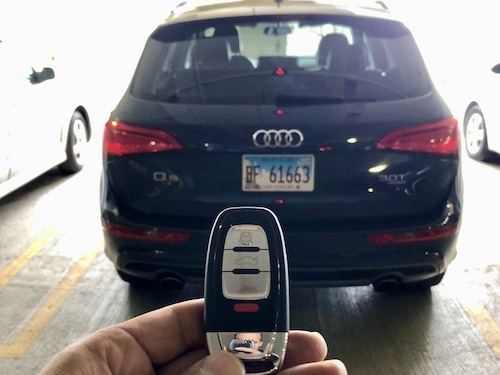
Ever locked your keys in the car and felt that special kind of panic that only comes from being stranded in a grocery store parking lot? Yeah, we’ve been there too, both as humans and as the folks you call to fix it. Let’s talk about the surprisingly complex world of car keys and why that little fob on your keychain costs more than a fancy dinner for two. We’ll cut through the confusion and get you the real info, so the next time you face a lost car keys situation, you know exactly what you’re dealing with.
Why Are Car Keys So Stupidly Expensive Now?
Remember when a key replacement meant a quick trip to the hardware store for a two-dollar piece of metal? We miss those days, too. Modern car keys are tiny, encrypted computers. That’s the real reason behind the price shock.
When you need a new one, it’s not just cutting metal. A technician has to:
- Access the vehicle’s computer system using specialized, often brand-specific software.
- Program a new transponder chip to “handshake” with your car’s immobilizer system.
- Cut a precise physical key (if it has one) using your Vehicle Identification Number (VIN) or a sophisticated scan of the lock.
- Sync any remote functions for keyless entry, trunks, and panic alarms.
It’s a tech job disguised as a locksmith job. So, while the cost makes us wince, there’s a legit reason for it. Getting a locksmith quote upfront is the best way to avoid sticker shock, and a reputable mobile locksmith like us at Onsite Locksmith will always be transparent about this before any work begins.
The Different Beasts in Your Keychain: A Quick Guide
Not all keys are created equal. Knowing what you have is half the battle. Here’s a breakdown of the usual suspects:
Traditional Metal Key
The classic. It’s just… metal. Becoming rarer than a polite comment section, but some older models still use them. Cheapest to replace, honestly.
Transponder Key (The Chip Key)
Looks traditional but has a plastic head housing a chip. If you’ve gotten a copy at a big-box store and it starts the car but then dies immediately, you’ve met a non-transponder key. The chip is non-negotiable for your engine to run.
Laser-Cut Key
These have a more intricate, symmetrical cut and are typically thicker. They’re harder to duplicate (good for security) and are often paired with a transponder chip. Common in many early 2000s to 2010s vehicles.
Smart Key Fob / Switchblade Key
The fob is separate, and the key folds out. It contains both a transponder and remote electronics. Losing this one is a double whammy—you’re replacing two high-tech components in one package.
Keyless Fob & Push-to-Start
No physical key at all (usually there’s a hidden one inside for emergencies). This fob is the brain of the operation. If it dies or goes missing, the cost is highest because it’s all electronics and programming. This is what causes most locksmith emergency calls these days.
Your Action Plan for Key Disasters
Okay, theory is great, but what do you actually DO when disaster strikes? Your strategy depends on the scenario.
Scenario 1: The Classic Car Lockout
You shut the door. Your keys gleam at you from the ignition. Classic. First, don’t try the coat hanger trick on a modern car—you’ll likely cost yourself more in damaged window seals. This is a prime time to call a vehicle lockout service. A pro locksmith for cars uses specialized tools to safely unlock your door without damage. It’s usually quick and, for something like a car lockout, often more affordable than you’d think. We handle these daily across San Diego, from La Mesa to Bonita.
Scenario 2: The Vanished Keys
Lost car keys are a bigger puzzle. First, check your spare (you have a spare, right? We’ll get to that). If no spare exists, you need a full replacement. This is where calling a 24/7 mobile locksmith near you pays off. They come to you, whether you’re at home in Spring Valley or stranded at work in National City. They can cut and program a new key on the spot. FYI, dealerships can do this too, but they often require a tow to their location and have premium labor rates. A local pro is almost always faster and more cost-effective.
Scenario 3: The Broken Key in the Lock
A key snaps off in your door or ignition. Don’t force it! A professional has extraction tools to carefully remove the broken piece. Often, they can then cut a new key from the broken pieces. If the break damaged the lock cylinder itself, they can repair or replace that too.
Dealership vs. Local Locksmith: Let’s Compare
This is the big question, right? Where should you go? Let’s break it down honestly.
| Feature | Dealership | Local Mobile Locksmith (Like Onsite Locksmith!) |
|---|---|---|
| Convenience | You usually go to them, often requiring a tow. | They come to you, anywhere—your home, office, or roadside. |
| Availability | Standard business hours, rarely 24 hours. | True 24/7 service for real locksmith emergency situations. |
| Price | Typically highest; parts and labor are at a premium. | Generally more competitive; direct locksmith quotes with no shop overhead. |
| Speed | Can be slow, may need to order parts. | Often same-day service, keys made on-site in your driveway. |
| Range of Service | Only for their brand(s). | Services all makes and models, plus your home, office, and mailbox locksmith needs. |
IMO, for most key replacement and car lockout needs, a trusted local locksmith is the winner. We’re your nearest solution that doesn’t sacrifice quality for convenience. The goal is to solve your problem, not sell you a dealership loaner car package.
Pro Tips to Avoid the Nightmare (And Save Money)
Let’s be smart so we can avoid these headaches together.
- Get a Spare. Seriously. It’s the single best investment. Get a basic, non-remote spare key made. It might not unlock the door remotely, but it will start the car and get you home. Store it somewhere safe—not in your car.
- Know Your Key Type. Check your manual. Is it a transponder key? A smart fob? Knowing this helps you understand replacement costs and processes.
- Have a Locksmith in Your Contacts Before You Need One. Scrambling during a panic is the worst. Find a reliable mobile locksmith service that covers your area—whether you’re in Chula Vista, Imperial Beach, or San Ysidro. Save their number. Maybe save ours? Just a thought 🙂
- Check Your Insurance. Some auto insurance policies or memberships like AAA have roadside assistance that covers lockouts or key replacement, often with a small deductible.
Your Burning Questions, Answered
1. Can a locksmith really make a key for my push-to-start car if I lose all of them?
Yes, absolutely. A skilled automotive locksmith has the diagnostic tools to interface with your car’s computer via the OBD-II port. They can program a brand new fob from scratch, provided they can prove ownership of the vehicle. It’s a technical process, but it’s what we do every day.
2. I called for a quote and it seemed high. Is there any way to get a lower price?
Always ask what the quote includes. Does it cover parts, programming, and service call? Sometimes the closest guy isn’t the most transparent. At Onsite Locksmith, our locksmith quotes are all-inclusive. The best way to save is to have a spare made before you lose the original, as duplicating is cheaper than generating a first key. Also, ask if there’s a difference in price for a non-remote “valet” key versus the full fob.
3. My key fob isn’t working, but my car still starts with it. What’s wrong?
This is usually one of two things. First, try replacing the battery in the fob—it’s the simplest fix. If that doesn’t work, the remote circuitry itself might be damaged or out of sync, while the separate transponder chip (which allows the car to start) is still working. A locksmith can often repair the fob or reprogram the remote functions for you.
So, there you have it. The world of car keys demystified. It’s a bit more complicated than it used to be, but the solution doesn’t have to be a stressful mystery. Whether you’re dealing with a frustrating vehicle lockout service need in Lemon Grove or a full key replacement in Nestor, the idea is to get you back on the road safely, quickly, and without a second mortgage. Keep our number handy for those just-in-case moments, and let’s hope your keys decide to stay loyal. But if they don’t, you know who to call.